
Unlocking Business Potential: The Power of Data Analytics and Visualization
In today’s fast-paced business world, data is no longer just a byproduct; it’s a strategic asset. Businesses that effectively collect, analyze, and visualize their data are the ones making smarter decisions, optimizing operations, and ultimately, outpacing their competition. But what exactly are the key benefits of leveraging data analytics and visualization services? Let’s dive in.
The Transformative Power of Data
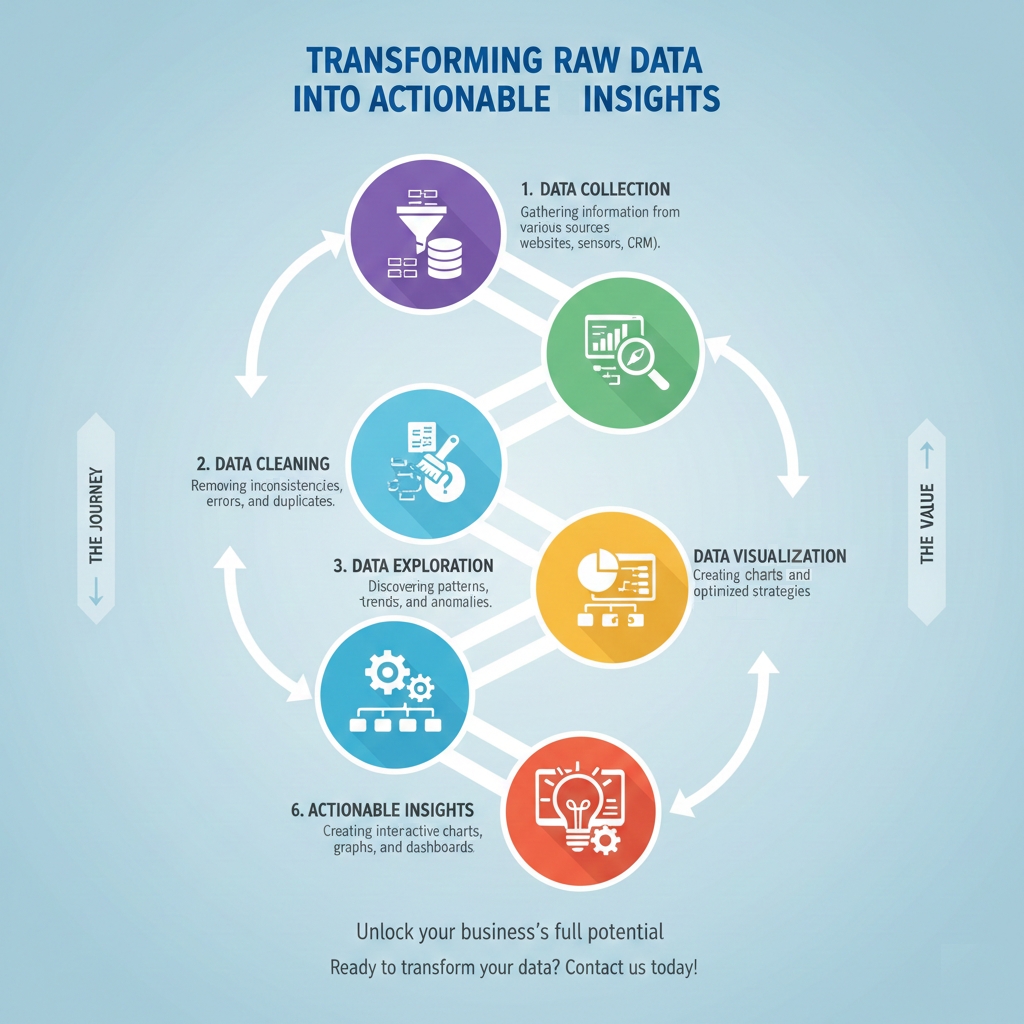
At its core, data analytics is the process of examining raw data to uncover trends, patterns, and insights. Data visualization then transforms these complex insights into easily understandable and digestible visual formats, such as charts, graphs, and dashboards. Together, they create a powerful synergy that can revolutionize how businesses operate.
Key Benefits for Businesses:
-
Improved Decision-Making: Gone are the days of relying solely on gut feelings. Data analytics provides a factual basis for decisions. By understanding historical trends and predicting future outcomes, businesses can make informed choices about everything from product development to market entry strategies.
-
Real-world Case Study: A major e-commerce retailer used data analytics to understand customer purchasing patterns. By identifying which products were frequently bought together, they optimized their website layout and created targeted recommendation engines, leading to a significant increase in sales and customer satisfaction.
-
-
Enhanced Operational Efficiency: Data can shine a light on inefficiencies within your operations. By analyzing performance metrics, bottlenecks can be identified and processes streamlined, leading to cost savings and improved productivity.
-
Real-world Case Study: A manufacturing company utilized data from their production lines to identify machine downtime and defect rates. Through predictive maintenance analytics, they were able to schedule proactive repairs, reducing unexpected breakdowns by 30% and improving overall production output.
-
-
Deeper Customer Understanding: Understanding your customers is paramount. Data analytics allows businesses to segment their customer base, identify preferences, predict behavior, and personalize experiences. This leads to stronger customer relationships and higher retention rates.
-
Real-world Case Study: A subscription-based service analyzed user engagement data to understand why some customers were churning. They discovered that users who didn’t interact with certain features within the first month were more likely to cancel. Armed with this insight, they implemented an onboarding program to highlight these features, resulting in a 15% reduction in churn.
-
-
Identification of New Opportunities: Data isn’t just about solving existing problems; it’s also about uncovering new avenues for growth. By analyzing market trends, competitive landscapes, and internal capabilities, businesses can identify untapped markets, develop innovative products, and find new revenue streams.
-
Real-world Case Study: A financial institution used demographic and behavioral data to identify an underserved market segment for a new type of investment product. By tailoring their marketing and product offerings, they successfully launched a new service that captured a significant market share.
-
-
Risk Mitigation: Proactive identification of potential risks is a significant advantage of data analytics. From financial risks to operational disruptions, data can provide early warning signs, allowing businesses to implement mitigation strategies before problems escalate.
-
Real-world Case Study: A logistics company used real-time traffic and weather data, combined with historical delivery performance, to predict potential delays and reroute shipments proactively. This reduced delivery failures and improved customer trust.
-
The Role of Visualization
While analytics uncovers the insights, visualization makes them accessible. Imagine trying to make sense of hundreds of rows of spreadsheet data versus seeing that same data represented in an interactive dashboard. Visualizations simplify complex information, highlight critical trends, and empower stakeholders at all levels to understand and act on data-driven insights quickly.
Conclusion:
In today’s data-rich environment, investing in data analytics and visualization services is no longer a luxury but a necessity for businesses aiming for sustainable growth and competitive advantage. By transforming raw data into actionable intelligence, businesses can unlock their full potential, make better decisions, and navigate the future with confidence.